Sitting Rising Test
Sit down on the floor and stand up again, using as little support as you can. Scored 0 to 10.
Strength, flexibility and balance in one move. In 2,002 adults aged 51 to 80, each extra point meant 21% better survival.
Own your age. Honor your body.
We don't ask how old you are.
We ask what you can do.
Simple tests that science links to a long, independent life. You are ranked against people your own age and sex, so a 72 year old in the top 5% of her age stands above a 40 year old in the middle of his.

Most competitions quietly end at 35. Ours starts there.

Every result is compared with published norms for your age and sex, and turned into one number: the share of people your age who cannot do what you just did. Top 5% means only 5 in 100 of your peers match you.
Woman, 72
18 chair stands in 30 s
Man, 41
Average for his age
Why is Legend different? Published reference tables stop at the 90th or 95th percentile. The top 1% will be set from the results of the Games' own participants, and it will get sharper every season.
Every ranked challenge has published age norms and is linked in large studies to how long and how independently people live.
Sit down on the floor and stand up again, using as little support as you can. Scored 0 to 10.
Strength, flexibility and balance in one move. In 2,002 adults aged 51 to 80, each extra point meant 21% better survival.
Stand up fully from a chair and sit back down, arms crossed, as many times as you can in 30 seconds.
The leg strength you need to live on your own. Linked to mortality across 28,036 people.
Stand on one leg for 10 seconds. Upper tiers go for time with eyes closed.
Static balance and fall risk. Failing 10 seconds meant 1.84 times the risk of death.
Grip strength on a hand dynamometer, divided by your body weight.
Whole body strength in one squeeze. A better predictor of mortality than systolic blood pressure.
Your usual pace over 4 meters, and the distance you cover in 6 minutes.
Everyday mobility and endurance. Every 0.1 m/s faster meant 12% lower risk of death.
Your aerobic capacity, from a lab test or a validated field estimate.
The strongest data of all: elite fitness carried 80% lower risk of death than low fitness.
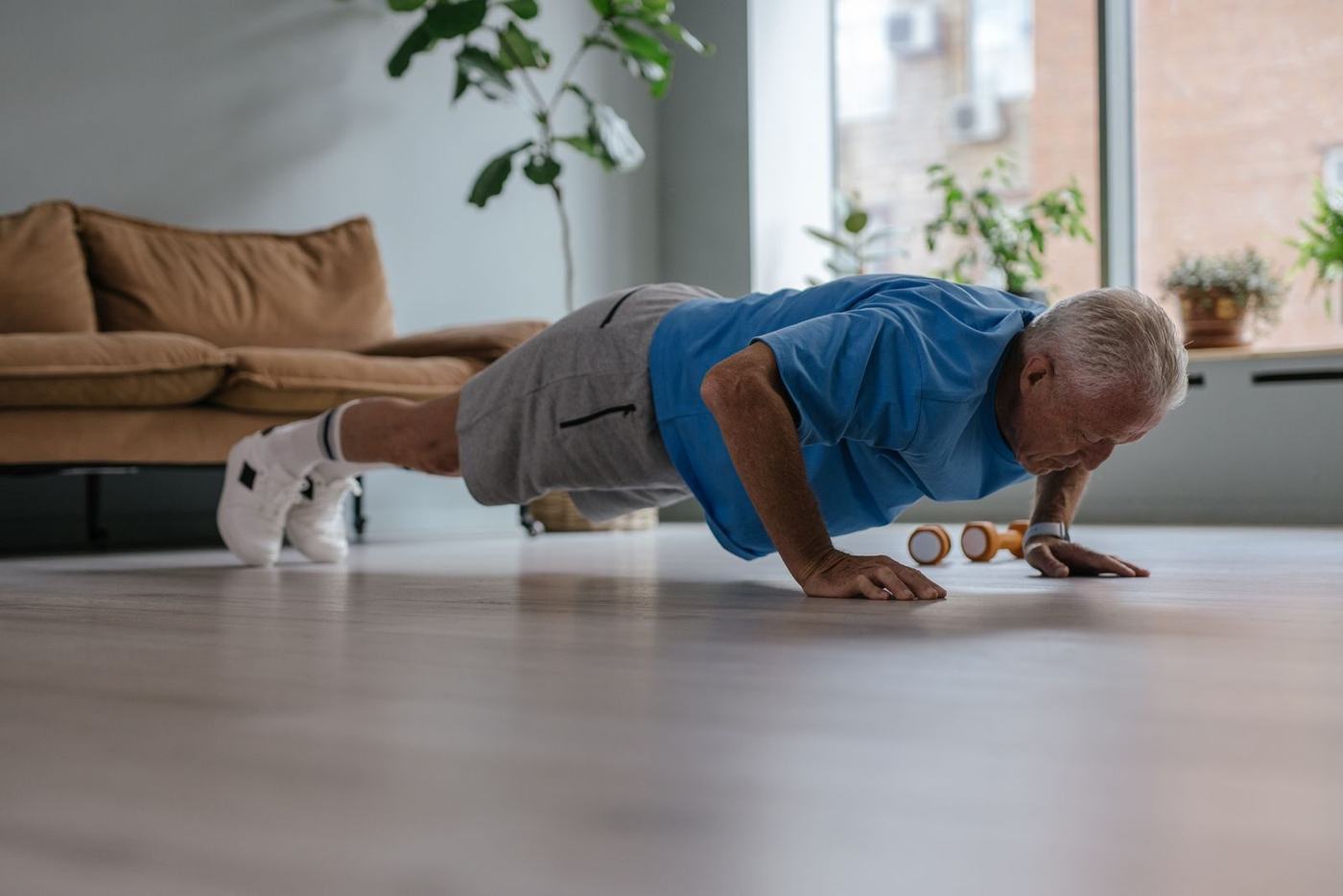
As many push-ups as you can, in one set. Women may use the knee version, as in the published norms.
Upper body strength and endurance. Men doing 40+ had 96% fewer cardiovascular events than those under 10.
Badge · Birthday Push-ups: as many push-ups as your ageNo published norms yet, so no ranking. Just badges, bragging rights and data we collect together. Some may become ranked once enough of you have tried them.
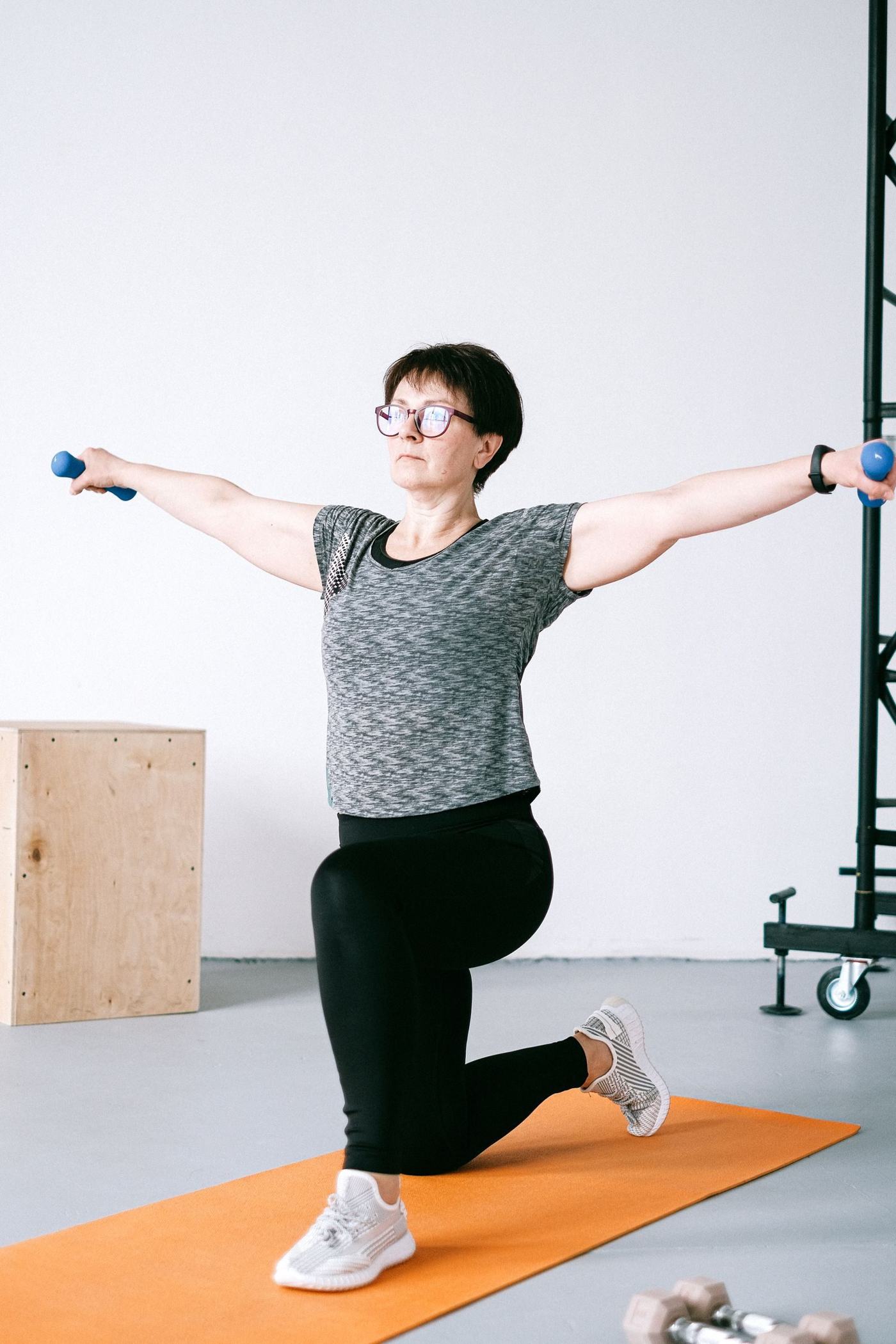
Grip strength, walking speed, rising from a chair, standing on one leg, getting up from the floor and aerobic fitness are simple measurements. Large studies with tens and hundreds of thousands of people link them to the risk of death and to staying independent. That is why we chose them.
higher risk of death for a Sitting Rising score of 0 to 3 versus 8 to 10, in 2,002 adults aged 51 to 80.1
mortality over 12 years at Sitting Rising scores of 0 to 4 versus a perfect 10, in 4,282 people.2
higher risk of death for people who could not stand on one leg for 10 seconds, adjusted for age, sex, BMI and disease (1,702 people, 7 years).3
higher all cause mortality for every 5 kg of weaker grip, in 139,691 people aged 35 to 70 from 17 countries.4
higher mortality for the slowest quarter at rising from a chair versus the fastest, in a meta analysis of 28,036 people.5
lower risk of death for every 0.1 m/s faster walking speed, across 9 cohorts and 34,485 people over 65.6
lower risk of death with elite versus low aerobic fitness, in 122,007 people, with no upper limit to the benefit.7
lower risk of death for every extra 1 MET of fitness, in a meta analysis of 33 studies.8
fewer cardiovascular events in men who could do over 40 push-ups versus under 10 (1,104 firefighters, 10 years).9
These studies show association, not cause. The tests are a mirror, not a medical diagnosis. If you have heart, joint or balance conditions, talk to your doctor before you start.
Health, longevity and human performance without the noise.
The Age Games come from Making Sense, the weekly newsletter by Doychin Karshovski, a performance and longevity coach with more than 35 years of practice. The idea is simple: make the tests that predict a long, capable life visible, measurable and fun to compete in, at any age.
Science advisors and partners will be announced before season one.
Register your interest for season one. We will send the test protocols, the filming guide and the date the first challenge opens.